
Happpppy April
As March marched on!

Hello friends, fans, and new subscribers. It’s been a while, and I have completely missed sending out March’s newsletter!
I am looking forward to letting you know what I have been up to here as spring has arrived, sometimes with days more like winter, but thankfully with enough glimpses of a true springy day. Hot sun sparkling through the clouds and triggering awake lots of early flowering ephemerals, bulbs, perennials, flowering trees, and shrubs that don’t mind the occasional brisk morning and late night temperatures lingering in the high 30’s and mid 40’s range. Most likely this newsletter will go out during the week we reach temperatures in the high 70’s and 80s.


Well, that didn’t happen as I continue to add to this newsletter, since I have been watching my phone’s weather app, and see that what was initially 2 nights of below freezing temps is now about 8 hours of below 32 degrees. Yet even several hours at 28 degrees can cause damage to both opened and closed flowers! Let’s see what happens. The precocious Magnolias, which flower before leafing out, are always at risk for damage.
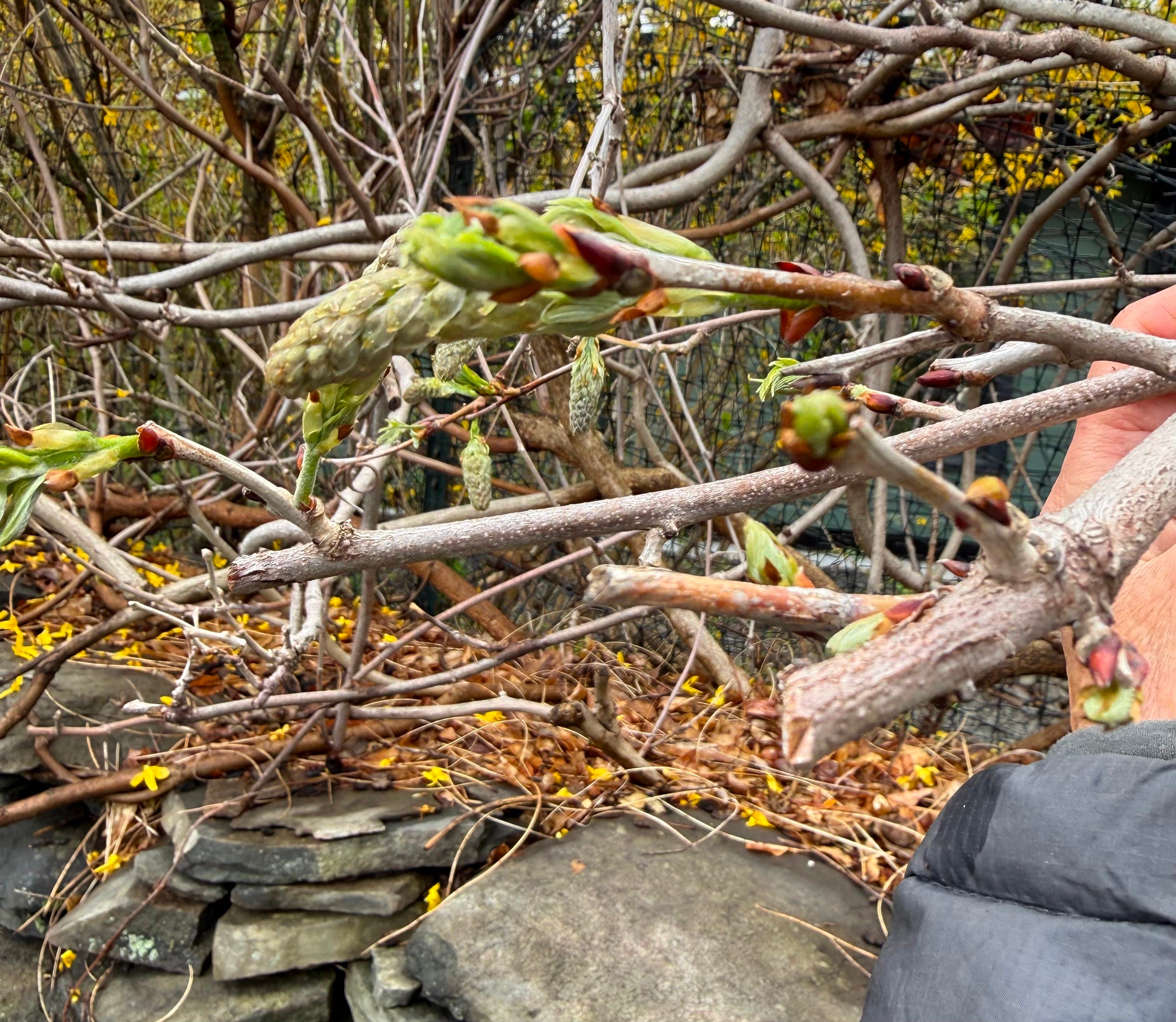
Of course, wouldn’t you know that after growing Wisteria sinensis for close to 25 years, this is the year that it finally has more than 6 blooms and is actually loaded with flowers! I will be covering it up just cause! Of course, that's a reason to grow our wonderful native Wisteria macrostachya ‘Aunt Dee’, which, for us, opens later (more like May in our area), with beautiful flowers (albeit smaller) that never get frost-kissed.


As many of you may know, we (that includes Scott, my partner/husband and co-director of the arboretum), had spent the entire winter glued to our computers working on our next book. This new book, tentatively titled “Hidden Gems for the Home Landscape” is a reference book, in a similar vein to our first book, “Cold-Hardy Fruits and Nuts”, with information about each plant’s history, growing conditions, etc., plus we added a section on designing with each specific plant.
Thank you to all the past paid subscribers who chimed in about which photos I should choose for certain chapters; it was really appreciated.


I want to share some Save the Date events with you.
Ticket sales are open now.
May 9th - Soft Opening Day for the Town of Rochester Spring Garden Tour.
May 10th - Opening Day (Mother’s Day) free entry for all moms.
June 6th - Plant Sale at Hortus.
June 14th - Levi O’Brien is offering two classes! Tree ID & Woodlore.
July 4th - Art in the Gardens - Featured artist is Adam Holland.
August 16th - Luke Sarrantonio is offering two classes! Relationships with Fungi & Forest and Fungi ecology walk.
** Stay tuned for more events!


Some things I learned along the way:
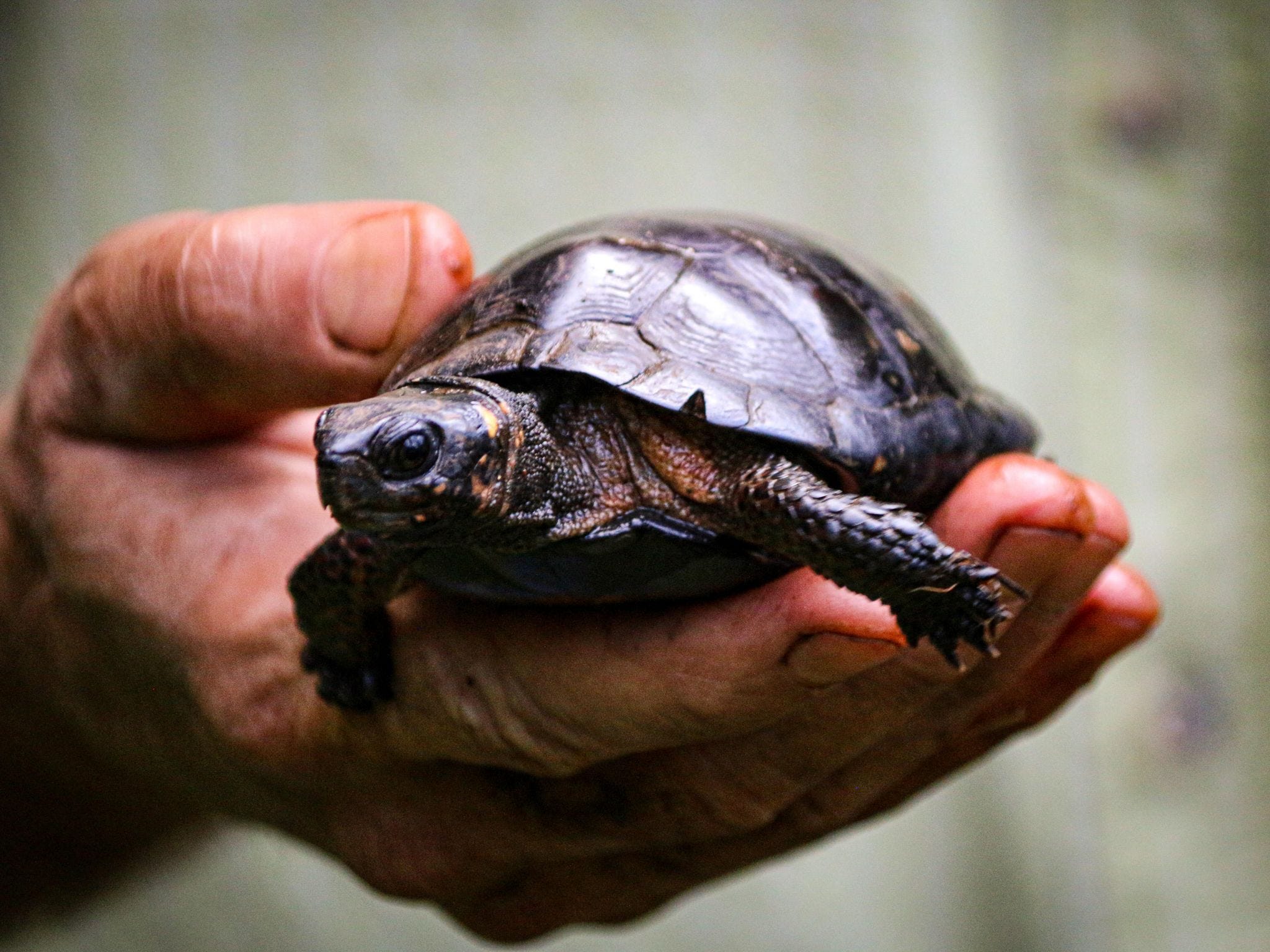
According to the Village of Chester in Orange County, Mayor John T. Bell, said the presence of the endangered bog turtle (Glyptemys muhlenbergii), may have been the reason ICE decided not to proceed with plans for a detention center in the town. While ICE did not directly confirm the bog turtle's role, the U.S. Fish and Wildlife Service stated that only ICE could say whether the turtle's presence impacted their decision-making.
Is your bird feeder, especially the flat ones, (which include those “smart” bird feeders) a culprit when it comes to spreading diseases around bird populations??
The verdict isn’t fully out, and really who can deny the joy it brings to see a feathered friend eating some seed as you are washing your dishes? But the reality is most people do not clean their feeders on a regular basis. What can you do? Check out this article that the U.S. Fish and Wildlife has.
My bigger concern is that where is all this bird food coming from? It certainly isn’t local, and I highly doubt it was even raised here in the U.S., so are we really okay with having a big footprint on a seed source that most likely isn’t organic? My thought is that you should put in plants that produces, berries, or those that produce seeds that birds in your area enjoy. Even if you don’t have a large space, you can easily plant some smaller stature sunflowers in a pot to put on your steps/stoop. If you just have some window boxes, annual flowers like Globe Amaranth (Gomphrena haageana) and Marigolds (Tagetes erecta) not only provide color and beauty but also provide fodder for the birds. This is a fun resource to check out and learn about more flowers you can plant to feed the birds in your area.
Also birdbaths are another way that visiting birds spread pathogens among themselves. If you are changing the water daily, and washing it out weekly than you’re all good. I’m not saying to dish the dish, because I know how much delight it brings to folks to see birds bathing in a water bath, but if you’re not following the prescribed recommendations, you may want to consider changing up your routine!


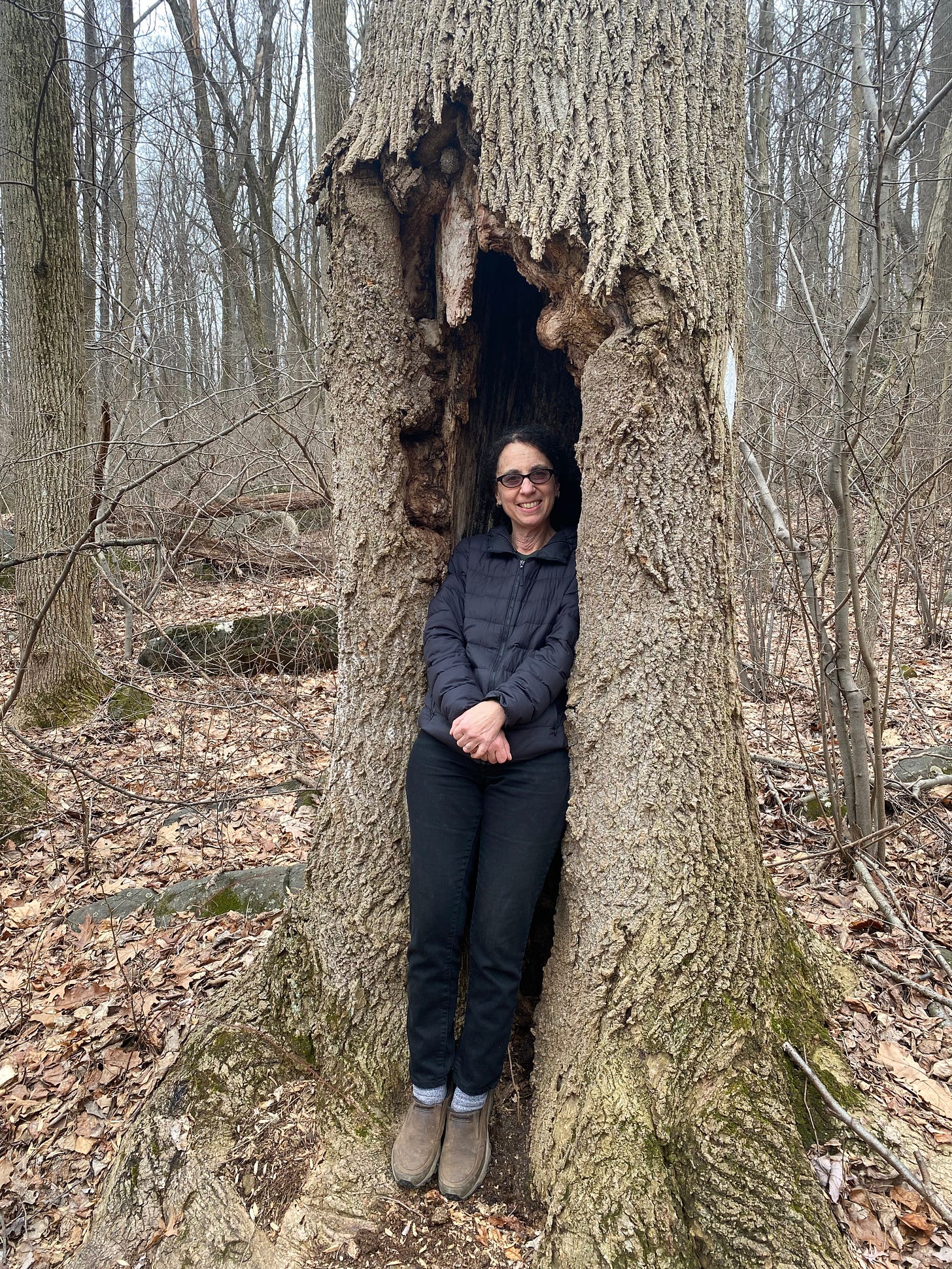
Lets talk about Arbor Day for a second which is on Friday April 24th. Like Earth Day, this is a day which we celebrate nature.
Excuse me, why do we delegate just ONE day for celebrating nature and specifically all things trees? Don’t get me wrong, I LOVE trees and I am a tree hugger, but why just this one day? Julius Sterling Morton, an avid tree planter and enthusiast, is responsible for coming up with Arbor Day in 1872. It’s estimated that nearly one million trees were planted in Nebraska City, Nebraska on that day. That’s terrific, but lets not stop planting trees after this coming Friday!
However, now that I have had my rant, and in the spirit of Arbor Day, here are some fun facts I learned along the way to share with you:
Arbor Day is always celebrated on the last Friday of the month of April.
By 1885 Arbor Day had become a legal holiday in Nebraska.
Arbor Day was almost called “Sylvan Day”, which translates to “wooded”.
Within 20 years of its creation, the holiday was celebrated in every state except Delaware, which eventually joined in.
Hortus Arboretum is a nonprofit organization that is funded by YOU our supporters.
Please consider donating to our 2026 campaign to extend our propagation area. We are looking to double its size this year. By doing so we will be able to offer more rare and uncommon plants for sale and perhaps more importantly we will be able to raise more rare and endangered plants for the arboretum. We often start plants by seed or receive small seedlings with tiny root systems that we subsequently grow out for many years before planting them in the arboretum. Having more space to grow and take care of these special plants not only increases the diversity of Hortus, but in the future will also allow us to propagate them to sell to the public.
Other ways you can show your support:
We are also looking for volunteers to help us. For more information please contact us!
Consider becoming a member. Membership privilege also extend to many other public gardens throughout the Northeast and beyond!
Or becoming a paying subscriber to my Substack page which supports both these newsletters and the occasional notes I write, like this one:
Thanks for reading along! See you really soon in the gardens.
Allyson