
Merry New Year
...here's to a fruitful, productive, and beautiful 2026!

Greetings from snowy upstate New York, specifically the mid-Hudson Valley or Lower Catskills region, depending on who you are talking to.
I wanted to say a BIG thank you for supporting Hortus in any way that you have!
If you had the opportunity to visit the arboretum last year, or take a class, join us for a walking tour, attend the “Art in the Garden Event”, or just follow us on Instagram, thank you so much. Thank you for becoming a garden member or making a donation. Your support helps us to continue to grow.


I hope this finds you well recovered from being around family & friends (or not), and from indulging just slightly too much. I’d like to think of you all perhaps sitting around with a big stack of plant & seed catalogues, with my book nearby, trying to figure out what type of plants to put in for the 2026 season. I mention my book, Cold-Hardy Fruits and Nuts, but it was, in reality, a fully collaborative effort with my husband-partner-fellow plant enthusiast, Scott Serrano.


Together in 2017 on a trip in Bali as we were visiting a local nursery, and buying a few Blood Lily bulbs to bring back (Scadoxus multiflorus), trying to figure out what exactly they were, and how to grow them, since we didn’t know how to say “Kami hanya bisa berbicara sedikit bahasa Indonesia”- “we speak just a little indonesian.”
We realized we sounded a lot like the folks who come visit the gardens wanting to know what something was, and how to grow it. That’s when we came up with the notion of writing our own book! Now, almost 4 years after its debut publishing day, we have heard from so many folks how useful the book has been.
Thank you!
If the book has been helpful to you please consider giving it a review on Amazon (even if you didn’t buy i through them). Reviews are very helpful!!
Plus, we love seeing it being promoted in plant catalogues, “Lots of research and growing information on 50 of the more obscure food-bearing woody plants for the north. Focus is on varieties with little if any diseases and pest issues.” (courtesy of Burnt Ridge Nursery & Orchards).
Currently, we are working on our next book, doing the same amount of research and writing on plants that we consider “Hidden Gems”.


You may have noticed that I have been posting less and less. Forgive me, please! If you are a paying subscriber on Substack, thank you for your patience. You will have noticed less content specifically for you over the past several months! SO because of that I am working on some special content - a special collaborative surprise in the making, so stay tuned for that.
For all you “regular” subscribers, have you read one of my notes? I will start up on those once again, perhaps even sharing some “rough” drafts on some of the plants I am writing about.
If you live in the Tri-state region, we will be giving two talks this year at NOFA-NY on 1/10. We are thrilled to be asked back, and because of this, we endeavour to give presentations that are different each time. Our 2 talks this year are on Native Plants (mostly) for Agroforestry Systems, and the other on Berries. As founders and managers of an arboretum/botanical garden, we have had lots of hands-on experience growing different plants, especially food ones, and we want to share some suggestions for what to grow and how to grow them on both these topics.
It seems like every newsletter I mention the Spotted Lantern Fly (Lycorma delicatula). Although there is a lot of noise out there about things that are helping to kill the insects including- Milkweed plants (Asclepias spp.), and some birds like Cardinals, Catbirds and chickens, the truth of the matter is WE humans need to take this on.
SO… this is a good time to get outside to look for Spotted Lantern Fly (SLF) egg masses! Really, plus you need a break from looking at all the seed and plant catalogues…
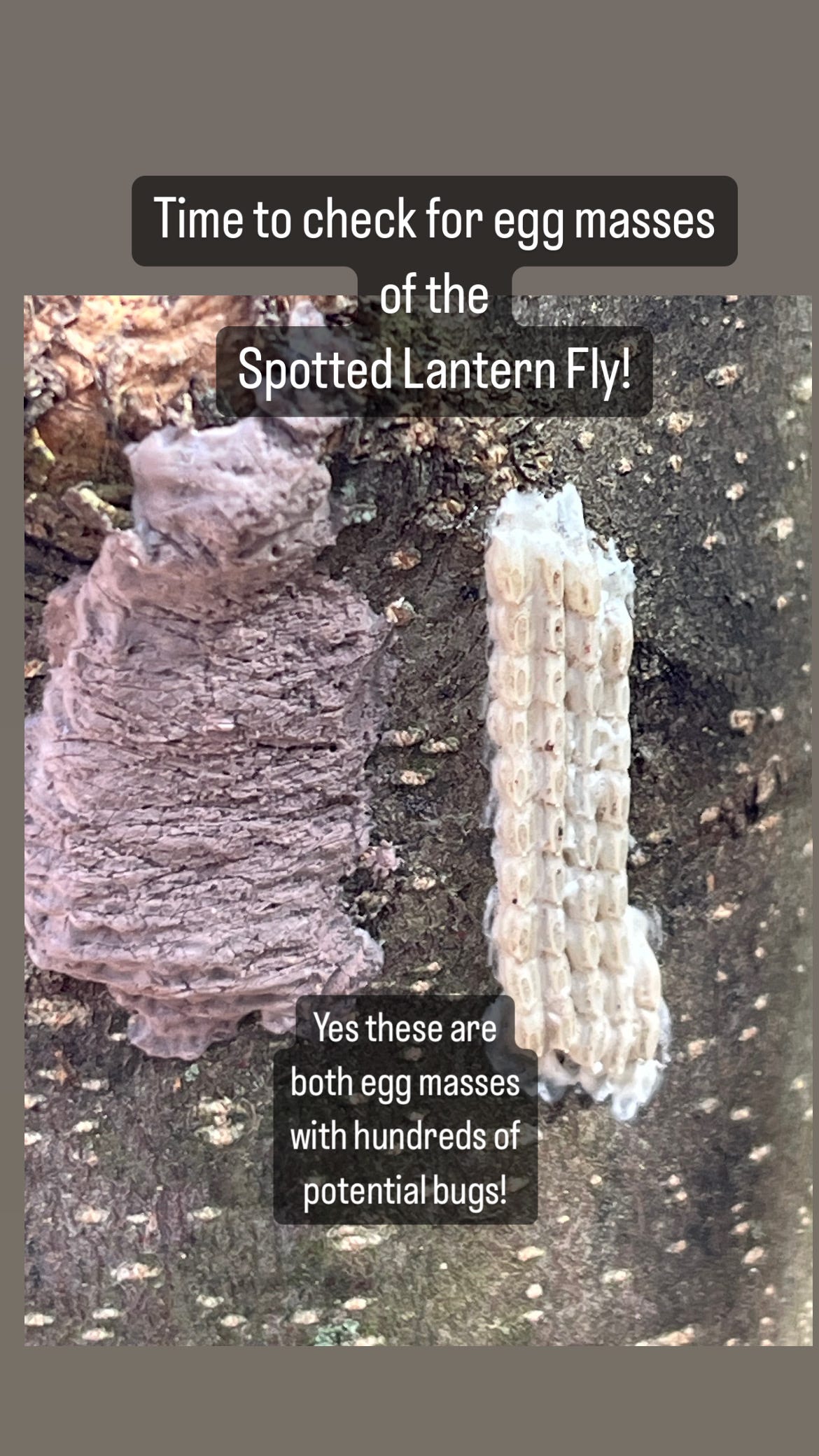
The egg sacks are a little more challenging to spot than Spongy Moth eggs, often blending in effortlessly with the tree bark. But nevertheless, on a sunny and above-freezing day, it's a good incentive to get outside and do something proactive towards reducing the numbers of this insect.
Interestingly, I came across an article that discusses how some honey bees are feeding on the honeydew of the SLF and how this is affecting the resulting honey.
Read/or listen to this article from NPR: Honey flavor reaches new depths with... spotted lanternfly droppings
Click on the photo below to see how one place is dealing with it.
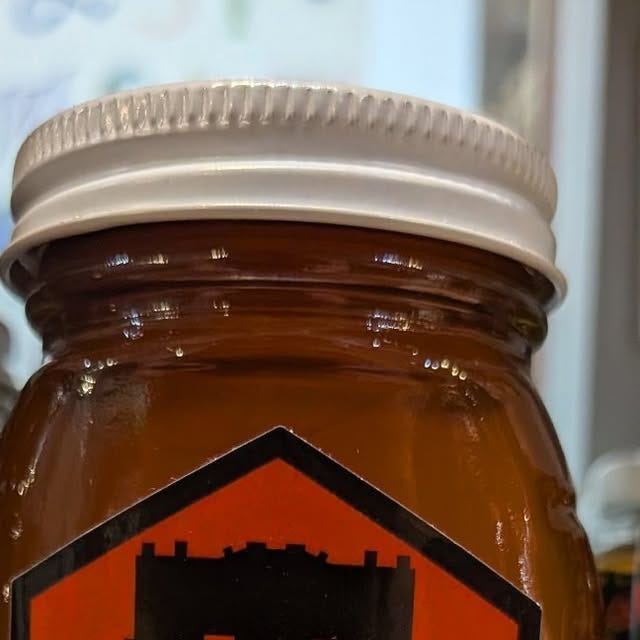
Although I have yet to taste it myself, this is A THING. (And yes- I did purchase a bottle to try!!)
Not only is it being sold as something yummy, but a nearby confectioner is making use of the honey and putting it in their candies. I couldn’t find a photo of a honeybee visiting the SLF sap but I did have one for a yellow jacket in a video, so that you can get the idea of how insects are utilizing the “honeydew”…
When I was living in Manhattan in my early 20’s and saw Christmas trees on the curbside in all sorts of dress or undressed mode. I remember thinking that I should start documenting all these discarded trees with my camera, which I did for a short period of time, but honestly, it was a bit depressing. However, every year since I wish I had taken on that photographic series!
Cutting down a tree to bring inside my house to then discard back outside in a matter of weeks has never been something that made sense to me.
Recently, I’ve seen some interesting posts about how folks are recycling, or shall I say upcycling, their trees. One is from a cookbook published in 2020, where the author offers up recipes for using them for cooking!
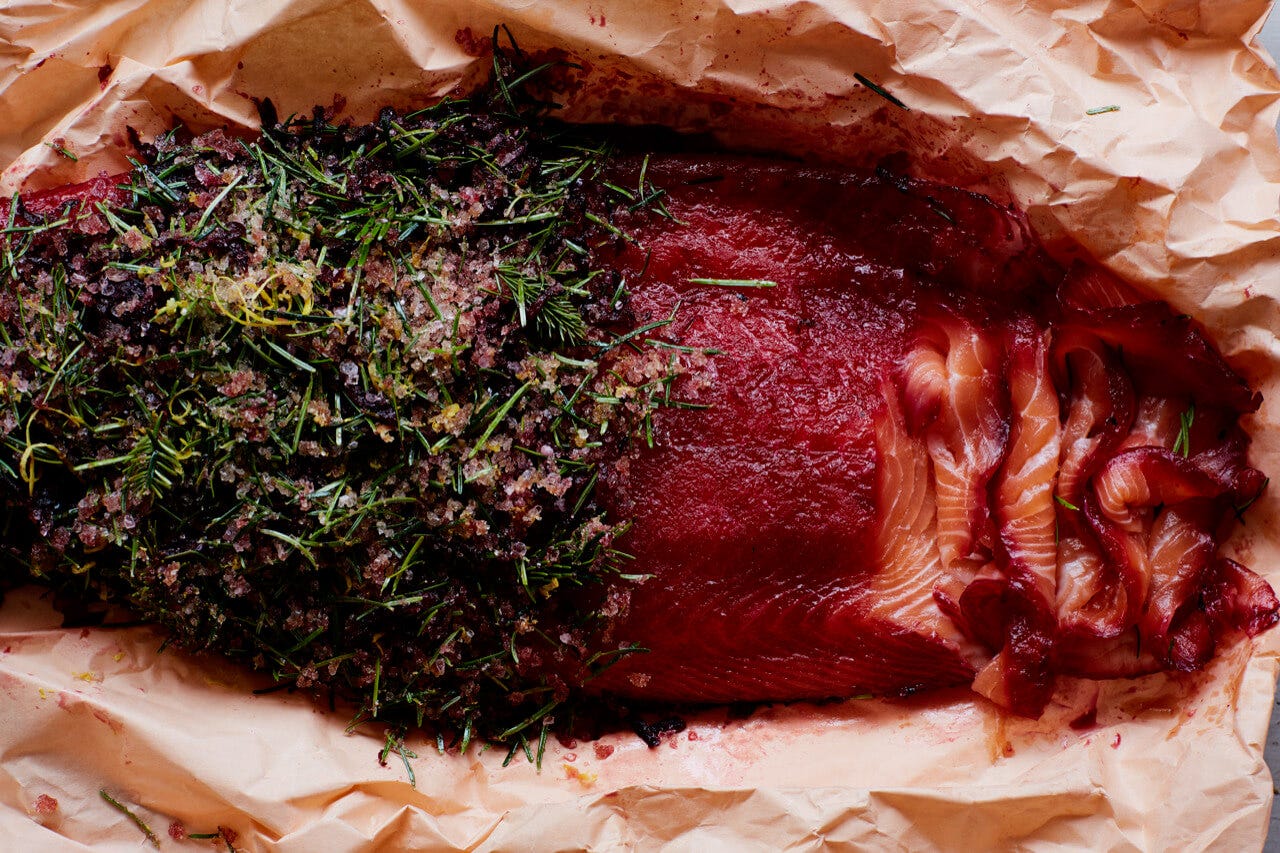
Another writer, Tom Kimmerer who I just started to follow on Substack, who writes about all things trees, (and who you should follow), offers up a note/post about how they are being utilized for fish habitat…super interesting!
I just want to acknowledge that I know that there are so many accounts out there to subscribe to and follow, so if you have read this much so far, my appreciation cannot be said enough! Thanks for reading along, and happy New Year.
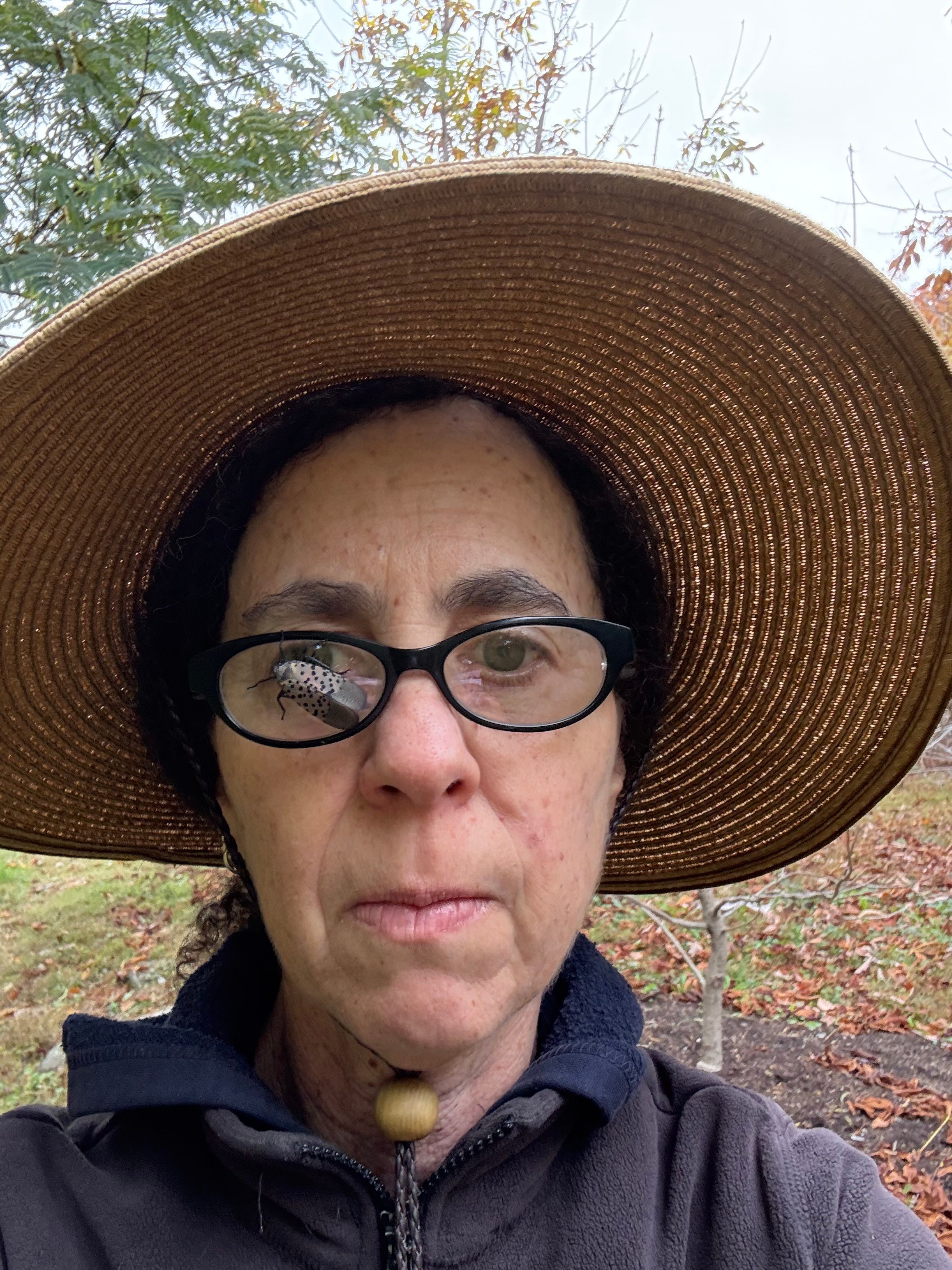
May it be a happy, healthy & productive 2026 to you all!
Allyson
Thank you Allyson! Interesting wake up “read” as always! Particularly about identifying the SLF egg masses ….. but is there anything we should usefully do to reduce the population?? Best wishes
C&N